When the Clock Strikes and the Keys Change Hands: The Sacred Art of Fandom Succession
It doesn't always happen at midnight. Sometimes it's a Sunday afternoon on a Discord server with a few hundred people watching a pinned message get updated in real time. Sometimes it's a handwritten letter posted to a subreddit that's been running since the early Obama years. But whenever it happens — and however it looks — the moment a fan community formally passes leadership from one generation to the next carries a weight that's hard to put into words.
These aren't just admin transfers. They're rituals. And more fan communities are starting to treat them that way.
Why Ceremony Matters More Than You'd Think
Let's be honest: fan communities have a complicated history with leadership transitions. For every graceful handoff, there are ten that went sideways — founders who disappeared without warning, mods who burned out and just stopped showing up, Discord servers left to rot because nobody ever had a real conversation about what happens next. The default setting for most communities is to pretend succession isn't coming until it already happened.
But something is shifting. Slowly, in corners of fandom that have been around long enough to watch a few generations of fans cycle through, people are starting to build intentional rituals around the moment of transition. And the communities doing it right are finding that the ceremony itself — the act of making the handoff feel deliberate and meaningful — does something important for everyone involved.
Psychologists who study group identity will tell you that rituals serve a specific function: they mark change in a way that the brain can actually process. Without ceremony, transitions feel like losses. With ceremony, they feel like continuations. That distinction matters enormously in fan spaces, where so much of the emotional investment is tied to a sense of continuity — the idea that this thing we built together isn't going to just evaporate.
The Midnight Handoff: Where the Tradition Gets Its Name
The phrase "midnight handoff" started circulating in fandom circles a few years back, borrowed loosely from the world of political inaugurations and New Year's countdowns — this idea that there's a specific moment when the old guard steps aside and the new one steps up. Some communities have leaned into the theatrical side of it hard.
One long-running fan forum dedicated to a beloved sci-fi franchise — the kind that's survived three reboots and two network cancellations — made headlines in its own small corner of the internet when its founder organized what she called a "passing of the archive." The community had been going for over a decade. She'd built it from a Livejournal group into a multi-platform operation with original fan art, a podcast, and an annual virtual convention. When the time came for her to step back, she didn't just update the mod list. She wrote a 3,000-word post that read more like a commencement speech than an announcement. She named every moderator who'd served. She told the story of the community's origin. And then, at the end of it, she formally introduced the new leadership team — not just their usernames, but who they were as fans, what they'd contributed, and why she trusted them with something she'd spent a decade building.
The response from the community was immediate and emotional. People who hadn't posted in years came back to say something. New members who'd never met the founder felt something shift in how they understood the space they were part of.
"It made me feel like I was inheriting something real," one of the incoming moderators said afterward. "Not just a set of rules and a password. An actual legacy."
What These Rituals Actually Look Like
There's no single template. That's part of what makes this emerging tradition interesting — communities are designing their own ceremonies from scratch, pulling from whatever cultural vocabulary feels right for their particular fandom.
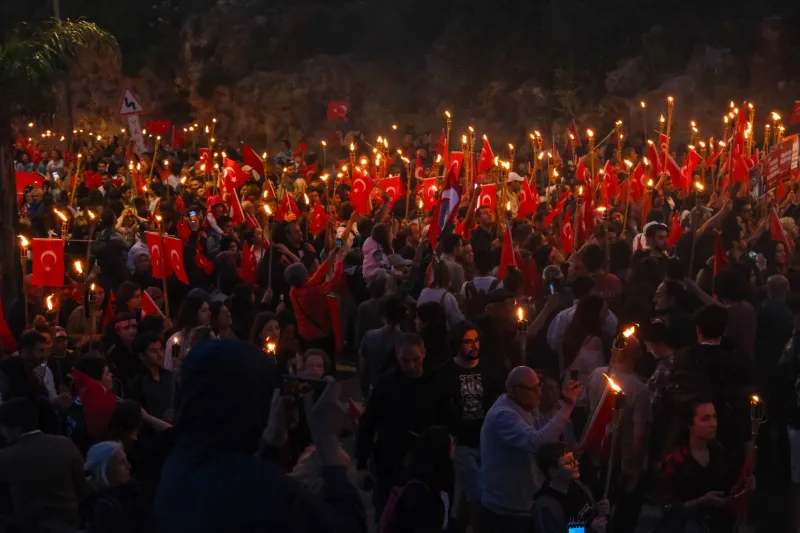
Some go formal. A community built around a long-running music artist's fanbase developed a "torch night" tradition where outgoing moderators each share a specific memory from their time serving the community, followed by a symbolic act — in their case, literally updating the community's banner image together, live, while members watched. It's small, but members who've witnessed it describe it as genuinely moving.
Others go intimate. A smaller fan community centered on an indie author's work does their handoffs in a private voice channel, with only the outgoing and incoming leadership present, before making a public announcement. The private conversation is treated as sacred — a space where the outgoing leader can share the unwritten knowledge, the context that never made it into any documentation, the things you only learn by doing the job.
And some communities are getting creative with the documentation itself. Instead of just updating a pinned post, they're building what some are calling "stewardship logs" — living documents that track who led the community, when, and what happened on their watch. It turns the history of the community's leadership into something visible, something that new members can read and understand. The torch-passing stops being invisible.
The Emotional Weight on Both Sides
Here's the part nobody really talks about: these handoffs are hard. Even when they're handled beautifully, even when the outgoing leader genuinely wants to step back, there's grief involved. Fan communities become deeply personal. The people who build them pour real time, real creativity, and real emotional energy into them. Letting go of that — even to someone you trust completely — is not a small thing.
The communities that handle this best seem to understand that the ceremony has to honor that grief, not paper over it. The outgoing leader needs space to feel the weight of what they're releasing. And the incoming leadership needs to receive that weight with the seriousness it deserves — not just the admin access, but the responsibility, the history, the expectation.
There's also something that happens for the broader community when they witness a handoff done with care. It signals that the community itself is bigger than any one person. That it was never really about the founder — it was always about the fans, the shared love, the thing being celebrated. The torch-passing becomes proof that the flame is real, that it doesn't live in one person's hands but in the community's collective memory and commitment.
Building the Ritual Before You Need It
The most consistent advice from communities that have navigated this well? Don't wait until you're already burned out to think about it. The best succession ceremonies aren't improvised — they're the result of communities that talked openly about transition long before it was urgent.
That means having real conversations about what the community stands for, what its history is, and what values the next generation of leaders should carry forward. It means identifying potential successors early and giving them room to grow into the role before they're handed the keys. And it means treating the eventual handoff not as a failure or an ending, but as the community doing exactly what it was always supposed to do — survive, adapt, and keep going.
The torch doesn't have to go out when the person carrying it gets tired. That's the whole point. You pass it. You make sure the new hand is steady. And then you watch the light keep burning.
That's not just good community management. That's fandom doing what it does best — taking something it loves and refusing to let it disappear.