Gone Before Anyone Noticed: The Quiet Disappearance of Fan Communities' Memory Keepers
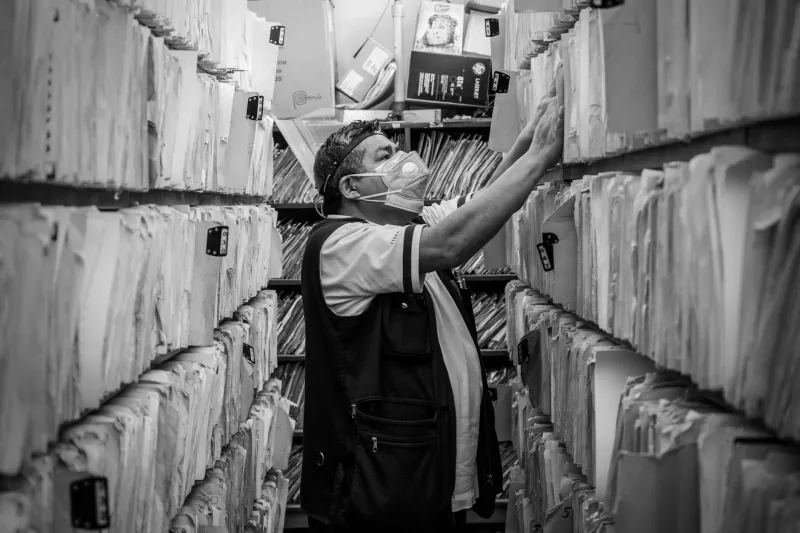
There's a particular kind of grief that fan communities rarely talk about openly. It's not the grief of a canceled show or a band going on indefinite hiatus. It's quieter and, in some ways, more disorienting. It's the moment a community wakes up to find that the person who knew everything — the one who maintained the wiki, kept the archive running, answered every "wait, when did that happen?" question — is simply gone.
No announcement. No handoff. Just an empty inbox and a wiki that hasn't been updated in four months.
The Invisible Infrastructure of Fandom
Every fan community of any real size has at least one. Sometimes they go by moderator, sometimes archivist, sometimes just "the person who runs the wiki." Their titles are informal, their compensation is nonexistent, and their value is almost impossible to overstate until the moment they're no longer there.
These are the people who built the timelines, cataloged the interviews, cross-referenced the discrepancies, and created the searchable record of everything the community collectively experienced. In a lot of ways, they are the community's long-term memory.
"I started the archive because I couldn't find the information I was looking for anywhere else," says Maya, who spent nearly six years maintaining a fan database for a mid-size indie band before stepping back last year. "At first it was just for me. Then other people started using it. Then people started depending on it, and I hadn't really signed up for that."
That shift — from personal passion project to community utility — is where things get complicated.
When Passion Becomes Infrastructure
The problem isn't that these archivists don't love what they do. Most of them genuinely do, at least at the start. The problem is that the community's relationship to their work changes in ways the archivists themselves often don't anticipate and rarely consent to.
What begins as a labor of love gradually accumulates the weight of expectation. Miss an update? You'll hear about it. Make an error? The comments section will let you know. Step back for a month because life got complicated? Prepare for a stream of DMs asking when the site will be back to normal.
"It stopped feeling like something I chose to do and started feeling like something I owed people," says Derek, who ran a comprehensive episode guide and fan theory archive for a cult sci-fi series for nearly a decade. "There's this assumption that because you started it voluntarily, you'll just keep doing it forever. Nobody ever asked if I was okay with that."
This is the recognition gap that sits at the center of so many archivists' eventual departures. The community benefits enormously from their work but rarely treats it with the same seriousness as paid labor — even when the time investment is comparable.
What Gets Lost When They Go
The immediate, visible loss is obvious: outdated information, broken links, unanswered questions. But the deeper loss is harder to quantify.
Fan archives aren't just databases. They're interpretive documents. The person building them makes thousands of small editorial decisions — what to include, how to categorize, what context to add, which sources to trust. That judgment, accumulated over years, can't be reconstructed from the raw data alone.
"When I left, someone else tried to take over," Maya explains. "But they didn't know the history of why certain things were organized the way they were. There were decisions I made in year two that only made sense if you understood what had happened in year one. None of that was written down anywhere."
This is the succession planning problem that almost no fan community takes seriously until it's already a crisis. The archivist's knowledge isn't just in the archive. A significant portion of it lives only in their head.
The Burnout Nobody Sees Coming
Fan archivist burnout rarely announces itself dramatically. It builds slowly, the way debt does — small withdrawals that seem manageable until suddenly they're not.
The triggers are varied but recognizable: a fandom drama that puts the archive at the center of an argument, a real-life change that leaves less time for unpaid work, a gradual sense that the community has stopped seeing the person behind the project. Sometimes it's as simple as realizing you haven't enjoyed the thing you're archiving in a very long time.
"I was so focused on documenting the fandom that I forgot I was supposed to be a fan," Derek says. "At some point the archive became the whole point, and that's not why I started."
The communities that retain their archivists longest tend to share a few common traits: they acknowledge the work publicly and specifically, they treat update gaps with understanding rather than entitlement, and they create low-pressure pathways for contributors to assist without adding management burden to the lead archivist.
Building Before the Crisis
The communities doing this well aren't waiting for their archivist to burn out before thinking about continuity. They're treating institutional knowledge as a shared resource that requires active stewardship.
Practical steps that actual communities have implemented include: maintaining contributor documentation that explains not just what the archive contains but why it's structured the way it is; creating a small team of "apprentice archivists" who shadow the lead maintainer and absorb institutional context over time; and establishing clear boundaries around what the archive does and doesn't cover, so that scope creep doesn't quietly expand one person's unpaid workload.
Some communities have also started having frank conversations about compensation — whether through Patreon, community fundraisers, or formal affiliate structures — acknowledging that asking someone to maintain a resource used by thousands of people for free, indefinitely, is a significant ask.
"I wish someone had talked to me about what I actually needed two years before I left," Maya says. "By the time I was ready to walk away, I was too tired to even explain why. I just stopped."
Carrying the Flame Forward
The Torch has always stood for something specific: the idea that what fans build together is worth protecting, worth passing on, worth tending even when the work is invisible. The people who maintain fan archives are doing exactly that — carrying a flame that the rest of the community holds up as a given.
The least a community can do is make sure those people know they're seen. Not just when the archive is useful, but consistently, specifically, and before the silence sets in.
Because when an unofficial historian walks away without warning, they don't just take their time with them. They take the memory. And a community without memory isn't really a community — it's just a crowd of people who happen to love the same thing, starting over from scratch every time someone new walks through the door.
That's not carrying the flame. That's watching it go out.